Interactive Dreaming
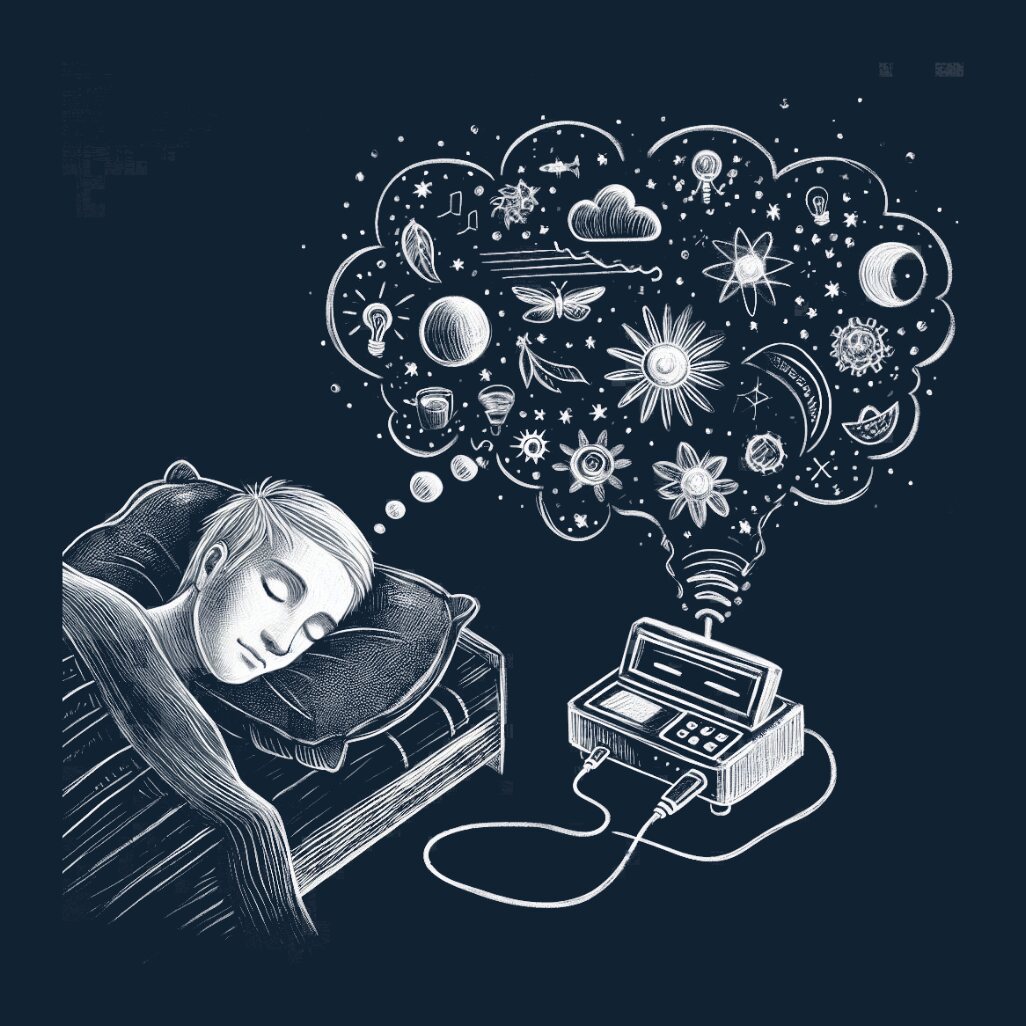
In the Interactive Dreaming project, we explore the possibilities of conscious interaction with reality from within lucid dreams. Previous studies demonstrated limited communication capabilities (see our open-access study in Current Biology and the Wikipedia entry), and we want to push these limits. The goal is practical applications such as targeted dream interventions, therapeutic approaches or artistic uses. We take ethical questions into account along the way.
The following works were created with the participation of the Institute of Sleep and Dream Technologies.
Real-time dialogue between experimenters and dreamers during REM sleep
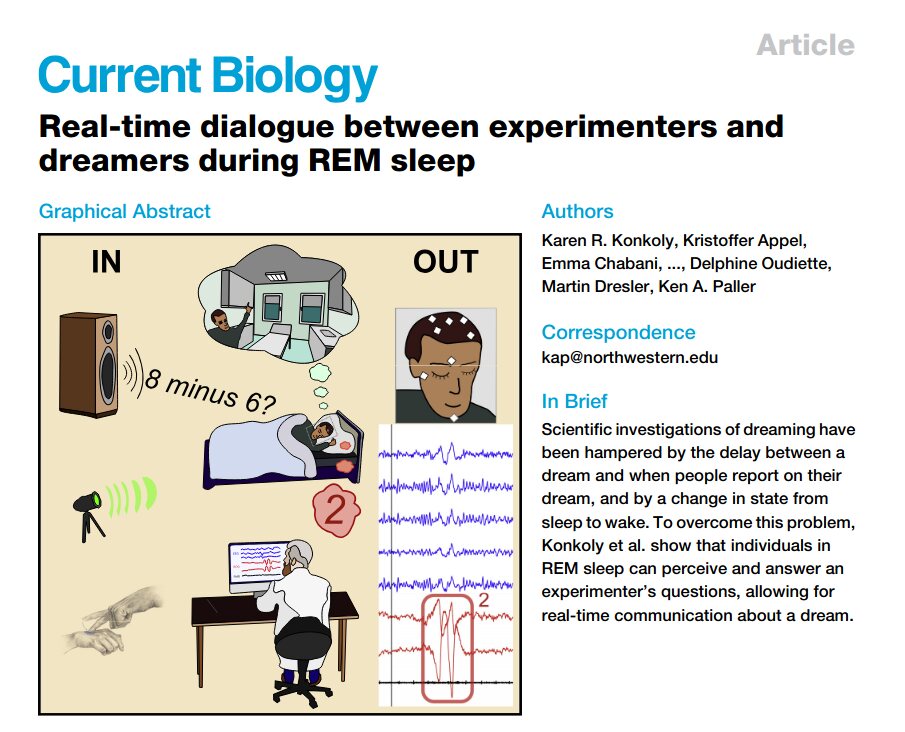
Here we demonstrate that individuals in REM sleep during lucid dreams can perceive questions and respond correctly using targeted eye movements or selective muscle activity. These repeated observations establish a reliable interface for real-time investigation of dream perception and cognition. Our institute was involved in data analysis and manuscript preparation. More information: Original publication (Current Biology, 2021).
Deep Learning for lucid dream communication
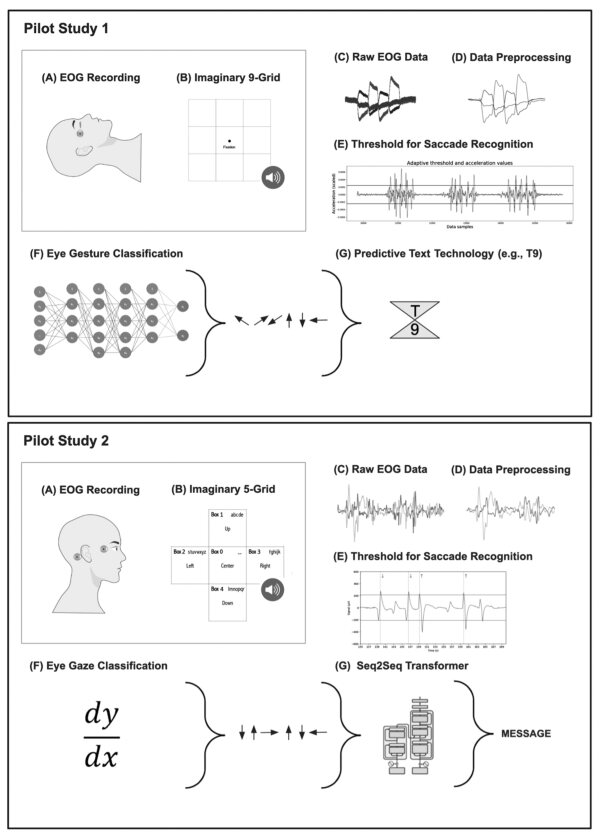
Here we show that a two-stage approach with CNN-based gesture recognition and transformer-based decoding achieved high classification rates (≈78–90%) in pilot studies and enabled practical typing speeds. This suggests that 2-D EOG is suitable for sending messages from lucid dreams in real time. More information: Original publication (Dreaming, 2025).
Whitepaper: Advanced Communication
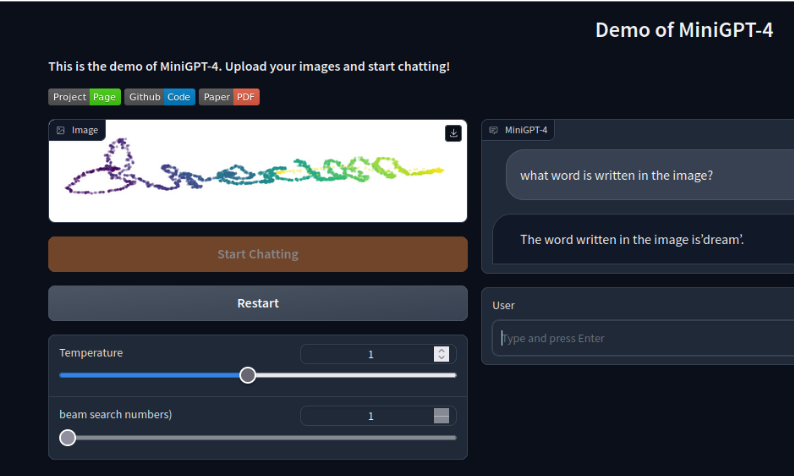
Here we demonstrate that advanced methods such as 2-D pattern reconstruction and the "swEYEpe" procedure can enable the transmission of more complex messages from dreams; the whitepaper discusses the associated requirements for signal acquisition and processing. View whitepaper (PDF)
Early works
Before the aforementioned works, the institute founder Kris Appel conducted a series of experiments on lucid dream communication, which were published in his 2013 Master's thesis (CwaSP PDF). These experiments demonstrated the feasibility of using eye movements and muscle activity to establish a communication channel with lucid dreamers, and laid the groundwork for subsequent research in this area.
Current Developments
We are currently working to replicate and further develop the results from the three aforementioned works using the Traumschreiber. Our goal is to make these advanced methods of lucid dream communication generally accessible and affordable, so that interested individuals can experience them independently at home.